all-in-one solar street light

What are the disadvantages of a solar street lighting system?

What are the disadvantages of a solar street lighting system? A solar street lighting system has higher initial costs, depends heavily on weather, and requires regular battery replacements. Key Disadvantages High Initial Investment: Buying and setting up solar street lights costs much more upfront than traditional grid-connected lights because you need to purchase specialized solar panels, batteries, controllers, and sturdy poles.

Key Specifications and Practical Guidance

The supplied material highlights the following points for what are the disadvantages of a solar:

  • Match the system to the application, operating conditions and required performance.
  • Compare the complete system, including the LED, solar panel, battery and controller.
  • Treat stated ratings as design inputs and verify them against the project specification.

How to Apply This Information

Start with the site and the intended use. Review available sunlight, mounting position, weather exposure, runtime expectations and maintenance access. Then compare the relevant figures in the source material rather than relying on a single headline number. Where the source provides a formula, rating or range, use that value as a planning reference and confirm final sizing with the responsible engineer or local code requirements.

Limitations and Selection Notes

Solar lighting performance depends on the full system and the environment. Shading, dirt, temperature, rain, snow, battery aging, installation quality and controller settings can change real-world results. The figures in this article should therefore be treated as source-based guidance, not a universal guarantee for every site.

FAQ

What is the main point of what are the disadvantages of a solar?

It is to match the solar street light design to the application, site conditions and required performance.

Which components should be checked first?

Review the LED fixture, panel, battery, controller, mounting structure and protection ratings as one system.

Can the figures be used for every project?

No. They are based on the supplied material and should be checked against local conditions, standards and engineering requirements.

What can reduce real-world performance?

Shade, dirt, temperature, severe weather, aging batteries and unsuitable settings can all reduce performance.

What should buyers ask suppliers?

Ask for complete component specifications, test data, installation requirements, warranty terms and maintenance guidance.

Conclusion

The supplied guidance shows that what are the disadvantages of a solar should be evaluated as a complete project decision. Use the stated specifications as a starting point, verify the site conditions and confirm the final configuration before installation.
street light solar led

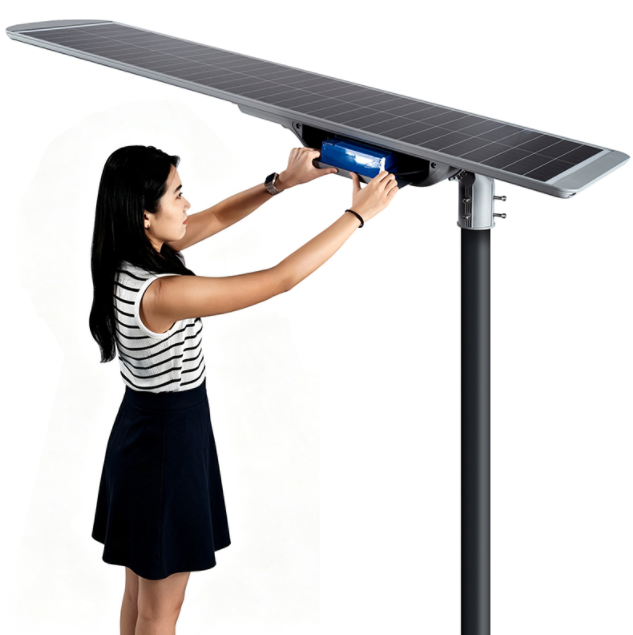
Can You Replace the Battery of an Integrated Solar Street Light?

Integrated solar street lights — also called all-in-one (AIO) or integrated solar street lights — combine the solar panel, rechargeable battery, controller, and LED lamp into a single weatherproof fixture. When the battery wears out, the most common question is: can you replace the battery of an integrated solar street light?

The short answer is yes — for many models. But successful solar street light battery replacement depends entirely on whether your specific unit has a serviceable, accessible housing or is completely sealed. This guide explains when a DIY swap is safe, when it isn’t, and exactly how to replace the battery step by step.

When Solar Street Light Battery Replacement Is a Safe DIY Job

Serviceable models are engineered with maintenance in mind. These all-in-one solar street light units feature a detachable maintenance panel or screws on the lighting fixture, allowing you to open the battery compartment and swap the battery without professional help.

Before you begin, confirm your model is serviceable: look for a visible service hatch, screws, or a removable underside panel on the fixture, or check the product manual. If the battery compartment is accessible, you’re good to go.

When You Should NOT Replace the Battery Yourself: Fully Sealed Models

Not every integrated solar street light is designed to be opened. In fully sealed models, the internal components and battery are glued, potted, or completely fused into a single waterproof unit. Self-replacement is not recommended, because:

  • Opening the housing ruins the weatherproofing. The factory waterproof seal cannot be properly restored by hand, leaving the electronics exposed to moisture.
  • You risk electrical damage. Prying into a sealed unit can damage the controller, wiring, or battery terminals.

If your solar street light battery is sealed inside the unit, contact the manufacturer or a qualified technician instead of forcing the housing open.

replaced battery solar streetlight
replaced battery solar streetlight PRO-D Series

How to Replace a Solar Street Light Battery: Step-by-Step

If your all-in-one solar street light is serviceable, follow these six steps to replace the battery safely.

Step 1: Lower the Fixture Safely

Safely bring the street light down from the pole. For pole-mounted units, use a ladder or a second person for support — always work with proper safety equipment and never work alone at height.

Step 2: Open the Battery Compartment

Unscrew the access panel carefully. Keep track of any rubber gaskets or waterproof seals as you remove them — every piece must go back in place when you reassemble the unit.

Step 3: Check the Battery Specifications

Note the exact specifications printed on the old battery before ordering a replacement:

  • Voltage (for example, 12V)
  • Capacity (mAh or Ah)
  • Chemical type — such as LiFePO4 (lithium iron phosphate) or lithium-ion

Step 4: Match the Replacement Battery

Buy an identical replacement matching the voltage, capacity, and chemistry of the original. Never use standard alkaline batteries — solar street light systems require specific rechargeable chemistries, and the wrong battery can damage the controller or create a safety hazard.

Step 5: Swap and Reconnect

Disconnect the old battery plug, then connect the new battery, carefully matching polarity — positive to positive (+ to +) and negative to negative (– to –) — before plugging it in securely.

Step 6: Reassemble, Seal, and Recharge

Reassemble the housing tightly, making sure all gaskets and seals are restored to preserve the waterproof integrity. Then let the fixture charge in direct sunlight for 24 to 48 hours before relying on it for normal nighttime operation.

Solar Street Light Battery FAQ

Can the battery of an all-in-one solar street light be replaced?

Yes — if your model has a serviceable, detachable housing. Fully sealed models are not designed for DIY battery replacement.

What type of battery does a solar street light use?

Most integrated solar street lights use rechargeable chemistries such as LiFePO4 or lithium-ion. Always check the label on the original battery.

Can I use a regular alkaline battery in a solar street light?

No. Standard alkaline batteries are not compatible with solar street light charging systems and can damage the controller.

Final Thoughts

Solar street light battery replacement is a straightforward, rewarding project — provided your fixture is built to be serviced and you match the original battery’s voltage, capacity, and chemistry. When in doubt, check your manual or contact the manufacturer: a correct swap can add years of life to your integrated solar street light.

solar lights for street

How Long Do Batteries Last? A Complete Battery Lifespan Guide

How long do batteries last? It’s one of the most common questions for anyone buying a phone, a laptop, an electric vehicle, or a home backup system — and the honest answer is: it depends on the device, its chemistry, and how you use it. Built-in lithium-ion (Li-ion) and lithium iron phosphate (LFP) batteries typically last 5 to 15 years, but consumer electronics age far faster than EV and solar batteries. This guide breaks down battery lifespan by device type, explains what drives battery degradation, and shows you exactly how to extend battery life.

Battery Lifespan by Device Type

Not all batteries age alike. The same lithium chemistry can serve a few years in a smartphone and well over a decade in a home storage system — here’s what to expect.

Consumer Electronics: 1 to 3 Years

Phones, laptops, tablets, and earbuds sit at the short end of battery lifespan. Their cells are rated for roughly 300 to 500 charge cycles before capacity drops below 80%. Because most people charge daily, real-world laptop battery life and phone battery life land at about 1 to 3 years — which is why battery health warnings start appearing after a couple of years of regular use.

Electric Vehicles: 8 to 15 Years

EV battery life is the good news story. EV packs are engineered for 1,000 to 2,000 charge cycles, translating to 8 to 15 years of real-world driving — comfortably beyond the typical 8-year manufacturer warranty. Even at end of life, most packs keep enough capacity for daily commuting, just with reduced range.

Home Solar and Backup Systems: 10 to 15 Years

Home energy storage uses LFP battery chemistry, chosen for thermal stability and cycle durability. Designed to charge from solar by day and discharge at night, these systems routinely reach 10 to 15 years before replacement.

What Causes Battery Degradation?

Three factors determine how quickly any lithium battery loses capacity. Control these, and you control battery degradation.

Charge Cycles

Every full charge-and-discharge cycle wears down internal chemistry. A cycle counts as one complete drain and refill — so topping up from 60% to 100% is only a fraction of a cycle. Heavy daily drainers see the fastest wear.

Temperature

Extreme heat or freezing cold speeds up permanent capacity loss. High temperatures accelerate the chemical reactions that degrade cells even when idle — a phone left in a hot car, or an EV parked in summer sun, loses capacity permanently.

Depth of Discharge

Draining a battery to 0% repeatedly causes far faster wear than keeping a partial charge. The deeper the discharge, the greater the chemical stress — which is why the 20–80% charging range is widely recommended for daily use.

How to Extend Battery Life: 5 Proven Tips

Want the longest possible battery lifespan from any device? Follow these habits:

  1. Avoid extreme temperatures — no hot cars, no direct sunlight for hours.
  2. Never drain to zero — recharge before the battery hits empty.
  3. Skip constant 100% charges — stay in the 20–80% range for everyday use.
  4. Use quality chargers — stable voltage protects cell internals.
  5. Replace only when needed — a degraded battery still works; swap it when it no longer meets your needs.

FAQ: Battery Life Questions, Answered

How long do EV batteries last?
Most EV batteries last 8 to 15 years or 1,000 to 2,000 charge cycles, outlasting the standard 8-year warranty.

How long do phone batteries last?
Typically 1 to 3 years (300–500 charge cycles) before capacity drops below 80%.

Is LFP battery life better than lithium-ion?
Yes — LFP chemistry offers superior cycle life (often 10–15 years) and better thermal stability, making it the standard for home solar storage.

The Bottom Line

How long do batteries last ranges from 1 to 3 years in consumer electronics to 10 to 15 years in EVs and solar storage — and your habits decide where you land. By managing temperature, avoiding deep discharge, and respecting charge cycles, you can push any lithium or LFP battery toward the long end of its lifespan — and get more years out of every device you own.

led street lamp solar panel

How Many Lumens Do You Need for a Driveway Solar Street Light?

Choosing the right solar street light for your driveway comes down to one key spec: lumens. For a residential driveway solar street light, you typically need 700 to 3,000 lumens, depending on your driveway layout, mounting height, and security needs.

Get the lumen range right, and you’ll enjoy a safe, well-lit driveway without wasting battery power or blinding your neighbors. Here’s a quick-reference guide and everything else you need to know before you buy.

Driveway Solar Street Light Lumens at a Glance

Driveway TypeRecommended Lumens
Single-car or small driveway700–1,000 lumens
Large driveway or wide entrance1,500–3,000 lumens
Motion-sensor driveway lights2,000+ lumens
Lights mounted 10–14 ft high2,000–2,500 lumens

Recommended Lumens by Driveway Type

Not all driveways are created equal — and neither are their lighting needs. Match the lumen output to the size and function of your space:

Single-Car or Small Driveway: 700–1,000 Lumens

A small driveway needs 700 to 1,000 lumens for clear visibility when parking and walking at night — without throwing harsh light into your neighbors’ windows. This range delivers a balanced, comfortable glow for compact residential spaces.

Large Driveway or Wide Entrance: 1,500–3,000 Lumens

If you have a large driveway or wide entrance, aim for 1,500 to 3,000 lumens to safely cover a multi-car area or a long approach. With more ground to illuminate, a higher lumen output ensures every corner is visible for drivers, guests, and delivery visitors.

Motion-Sensor Lights: 2,000+ Lumens

For motion sensor solar driveway lights, choose 2,000+ lumens so the fixture can stay dim or off and burst into full brightness only when movement is detected. This setup gives you security-level illumination on demand while saving battery life for the rest of the night.

Factors That Change Your Lumen Needs

The number on the box isn’t the whole story. These factors determine how well your driveway solar street light actually performs.

Mounting Height

Higher poles need more lumens. A solar street light mounted at 10 to 14 feet requires around 2,000 to 2,500 lumens to spread light effectively across the ground. The taller the fixture, the more output you’ll need to compensate for the distance between the light source and the pavement.

Realistic Specs: Beware Inflated Lumen Claims

Be skeptical of online listings claiming 10,000 lumens from a tiny solar fixture — it’s usually chip-level marketing math, not real-world output. Check engineered performance guides like Sunlux LED Lighting to see why optical quality matters more than inflated lumen numbers. A well-designed fixture with honest specs will outperform a flashy, overclaimed one every time.

Color Temperature: Warm White vs Cool White

Your lumen count works alongside color temperature:

  • Choose warm white (2,700K–3,000K) for a soft, inviting look that flatters your home’s exterior.
  • Choose cool white (5,000K–6,000K) if maximum security visibility is your main goal — cool light renders detail more sharply at night and pairs well with motion sensors.

FAQ: Common Driveway Solar Light Questions

How many lumens do I need for a single-car driveway?
Around 700 to 1,000 lumens is enough for clear parking and walking visibility in a compact driveway.

What is a good lumen count for a large driveway solar light?
Aim for 1,500 to 3,000 lumens to safely cover a multi-car area or long approach.

Do motion sensor solar lights need more lumens?
Yes — 2,000+ lumens lets the light stay dim or off normally and deliver full brightness only when motion is detected.

Does mounting height affect lumen requirements?
Yes. A light mounted at 10 to 14 feet typically needs 2,000 to 2,500 lumens to spread light evenly across the ground.

Are 10,000-lumen solar driveway lights real?
Rarely. Realistic solar fixtures deliver honest, engineered output — check guides like Sunlux LED Lighting and prioritize optical quality over inflated lumen numbers.


Final takeaway: Start with your driveway type, factor in mounting height and security priorities, and read the specs critically. With the right lumen range — 700 to 3,000 for most homes — your driveway solar street light will deliver reliable, efficient illumination for years.

led solar street lighting

Why Is My Solar Street Light Dim After Cloudy Days?

Your solar street light is dim after cloudy days — and no, that doesn’t necessarily mean it’s broken. Continuous overcast weather drastically reduces the energy your solar panels can generate during the day, depleting the battery’s stored reserve. Here’s what is happening inside the system, and how to fix it in four simple steps.

The Short Answer: It’s an Energy Deficit, Not a Hardware Failure

Your solar street light is dim because the panel could not recharge the battery enough to run the lamp at full brightness through the night. After several overcast days, the reserve is simply exhausted — and a smart controller dims the output to protect the system.

Why Solar Lights Go Dim on Cloudy Days: 3 Causes

Low Solar Input. Clouds block direct sunlight. While your panels still capture weak, filtered daylight (known as diffuse radiation), charging becomes very slow and inefficient — often too little to refill what the lamp used overnight.

Energy Deficit. If the light uses more power at night than the panel manages to replenish during short, cloudy daytime hours, the battery drains a little lower with each passing day. This cumulative deficit is why the light gets progressively dimmer.

Smart Controller Response. Advanced light controllers automatically dim the lamp or lower its output when they detect low battery voltage. This protective feature keeps the system from shutting down completely, so you still get some light rather than none.

How to Fix a Dim Solar Street Light (4 Steps)

If your solar street light is not bright enough at night, work through these fixes in order:

1. Clean the Panels. Wipe away dust, bird droppings, or debris so the panels capture as much scattered light as possible.

2. Check for Shading. Trim newly grown tree branches or remove obstacles blocking the light path.

3. Turn Off Temporarily. Switch the light off for 2 to 3 sunny days to let the battery recover a full charge.

4. Adjust Settings. Use a remote or smart controller to enable lower baseline dimming or motion-sensor modes so the light conserves power during extended bad weather.

FAQ: Do Solar Street Lights Work in Cloudy Weather?

Do solar street lights work on cloudy days?
Yes — panels still capture weak, filtered daylight, but charging becomes very slow and inefficient, so the battery may not fully recharge.

Why is my solar street light dim after cloudy days?
The panel did not replenish what the lamp used at night, and the smart controller dimmed the output to prevent a complete shutdown.

How can I make my solar street light brighter again?
Clean the panel, remove shade, switch the light off for 2–3 sunny days to fully recharge the battery, and adjust the controller to a lower baseline or motion-sensor mode.

The Bottom Line

A dim light after cloudy days is a sign of an energy deficit, not a broken fixture. Clean the panels, clear the shade, and give the battery a few sunny days to recover. In regions with long overcast stretches, lower the baseline output or enable motion sensing — so your light keeps working even when the sun can’t.

led street light solar system

Can Solar Street Lights Charge Without Direct Sunlight?

If you’re planning an outdoor lighting project in a cloudy, rainy, or low-sunlight region, one question comes up again and again: do solar street lights charge without direct sunlight?

The short answer is yes. Solar street lights can charge using indirect or diffuse daylight, though at a significantly reduced rate. Here’s how it works, what to expect on overcast days, and the one factor that actually decides whether your lights stay on.

How Solar Street Lights Charge Without Direct Sunlight

Diffuse Horizontal Irradiance (DHI): Panels Use Daylight, Not Heat

Solar panels don’t need blinding sun or heat to generate electricity — they respond to light. Even under heavy cloud cover, scattered ultraviolet and visible light reaches the panel from all directions. This is called diffuse horizontal irradiance (DHI), and it’s what keeps a solar street light charging on cloudy, overcast, and rainy days with a steady “trickle charge.”

Charging Efficiency on Cloudy Days: Expect a 10–50% Drop

Diffuse light charges, but slowly. On cloudy days, charging output typically drops to 10% to 50% of peak clear-sky capacity, depending on cloud thickness. That means a system sized only for sunny weather can fall behind — which is why professional solar street lights are designed around the next factor.

System Autonomy: Battery Backup for 3–7 Days of Low Sunlight

A properly engineered solar street light doesn’t rely on today’s weather. It banks energy for the bad weeks ahead:

  • LiFePO4 batteries — high-cycle lithium iron phosphate reserves that store surplus energy safely.
  • High-efficiency monocrystalline panels — the best low-light performers for capturing diffuse daylight.
  • MPPT controllers (Maximum Power Point Tracking) — electronics that squeeze maximum energy out of the panel under weak, variable light.

Together, these components give a well-designed solar street light 3 to 7 days of autonomy — enough backup to keep shining through consecutive overcast or rainy days.

When Cloudy Weather Beats a Solar Street Light: Key Limitations

Prolonged Overcast Weather Can Deplete Battery Reserves

Autonomy has a hard limit. If cloudy or rainy conditions persist longer than the system’s rated autonomy days, the battery depletes — and the light dims or fails until the sun returns. Always size the battery and panel for the worst week of your climate, not the best day.

Deep Shade Hurts Far More Than an Overcast Sky

Not all “darkness” is equal. A bright, open overcast sky still delivers diffuse light from every direction. Deep shade from heavy tree canopies or nearby buildings blocks light outright — cutting charging efficiency far more than weather ever could. Placement matters as much as panel quality.

Artificial Light Can’t Realistically Charge Street Light Arrays

Solar panels can technically absorb energy from strong artificial sources like indoor LED or incandescent lamps — but the yield is far too low to matter. For large outdoor street light arrays, artificial light is a myth, not a charging strategy.

How to Choose a Solar Street Light for Cloudy or Low-Sunlight Regions

Before you buy, check three numbers:

  1. Rated autonomy days — does the system carry 3–7 days of backup for your region’s longest overcast stretches?
  2. Panel efficiency in low light — monocrystalline panels outperform standard panels under diffuse daylight.
  3. Controller type — an MPPT controller is essential for squeezing energy out of weak, cloudy-day light.

FAQ: Solar Street Lights Without Direct Sunlight

Do solar street lights need direct sunlight? No. They charge from diffuse daylight, though at 10–50% of clear-sky output on cloudy days.

Can solar lights charge on a cloudy day? Yes — diffuse horizontal irradiance (DHI) provides a trickle charge through cloud cover.

How many days can solar street lights run without sun? Professional systems are rated for 3 to 7 days of autonomy, depending on battery capacity and panel sizing.

Do solar street lights charge in the rain? Rain itself doesn’t stop charging — panels still capture scattered light, but efficiency stays in the low end of the range.

Bottom Line

Solar street lights are far more weather-resilient than their name suggests. Diffuse daylight keeps them charging through clouds, rain, and overcast spells, while battery reserves and MPPT controllers carry them through the darkest stretches. The real enemies aren’t clouds — they’re deep shade, poor placement, and undersized battery capacity. Size for the worst week, not the best day, and your lights will stay on long after the sun hides.

solar system for led street lighting

Do Solar Street Lights Work on Cloudy and Rainy Days?

Many people mistakenly believe solar street lights only work under bright sunshine. It’s natural to worry that rainy or cloudy weather will render solar outdoor lighting useless. However, modern solar street lights can operate reliably through cloudy and rainy conditions. They harvest diffused ambient light for charging and draw power from backup batteries, paired with sophisticated smart control systems optimized for poor weather. Below is a full explanation of their operation and limitations during bad weather.

How Solar Street Lights Perform in Cloudy & Rainy Weather

Solar panels do not require strong direct sunlight to produce electricity. The whole system is designed to cope with low-light environments, relying on diffused light charging, battery storage and intelligent power control.

1. Power Generation from Diffused Light

Even when heavy clouds and rain block direct sunlight, solar panels can still capture scattered indirect light — known as Diffuse Horizontal Irradiance — to generate electricity. Charging efficiency drops significantly under these conditions, down to 10%–25% of the output on sunny days. Still, this weak continuous power supply maintains basic energy replenishment for the lighting system rather than cutting off power entirely.

2. Large-Capacity Backup Battery Storage

High-quality solar street light systems adopt reliable energy storage batteries, mostly lithium iron phosphate (LiFePO4) batteries that feature stable performance and long lifespans. Batteries get fully charged on sunny days to reserve surplus power for later use.

This stored power supports continuous lighting for 3 to 7 straight cloudy or rainy nights. The exact backup duration depends on battery capacity, solar panel size and overall system design, covering most cases of prolonged bad weather.

3. Intelligent Power Management Controller

Modern solar street lights come with built-in smart controllers, the key component for weather adaptation. When the system detects extended cloudy weather with insufficient incoming solar charge, it automatically enables energy-saving modes. The controller can lower LED brightness or trigger motion sensor operation: lights stay at low standby power and brighten only when pedestrians or vehicles approach. This smart adjustment cuts wasted energy and extends battery runtime.

Main Limitations in Severe Weather

Solar street lights handle short spells of cloud and rain well, yet they have clear limits during persistent extreme weather. The bottleneck is the system’s pre-configured battery autonomy period.

If rainy, overcast weather lasts longer than the rated backup days (typically 3–7 days), battery power will deplete without enough solar recharge. The lights will noticeably dim or shut down automatically to prevent permanent damage from deep battery discharge. Normal lighting resumes once sunny conditions return and recharge the batteries sufficiently.

Conclusion

Solar street lights do work on cloudy and rainy days. Leveraging diffused light generation, high-capacity battery storage and smart power-saving logic, they deliver stable outdoor lighting during short-term bad weather. For regions with frequent long-duration rainy seasons, select solar street lights with longer battery autonomy (5–7 days) to prevent lighting outages and guarantee year-round road safety.

outdoor solar street lights led

Do Solar Street Lights Work in Winter with Short Daylight?

The short answer is yes — qualified solar street lights work in winter, but only if the system is properly designed for shorter days and longer nights. Winter performance depends on four things: charging windows, night run-time, battery chemistry, and panel condition. Get those right, and your lights will shine reliably through the coldest months of the year.

How Winter Affects Solar Street Light Performance

Shorter Charging Windows

Fewer hours of daylight mean less time for photovoltaic panels to collect energy. Combined with lower sun angles and heavier cloud cover, winter can reduce a panel’s daily energy harvest by roughly 30–50% compared with summer. Every usable hour of sun matters more, so panel placement and angle become critical.

Longer Nights, Higher Energy Demand

Extended darkness increases the required run-time for the LED lamps. More hours of operation means more total energy consumption drawn from the battery — a demand the system must be sized to meet, not an afterthought.

Cold Weather: Good for Panels, Harder on Batteries

Cold weather actually improves solar panel voltage efficiency, which is good news for generation. The challenge is storage: standard batteries lose capacity and charge more slowly at low temperatures. Lithium iron phosphate (LiFePO4) batteries handle the cold far better than lead-acid — in cold regions, lead-acid battery life can shorten by roughly 40% at −15°C, while lithium batteries lose only about 10% . High-grade LiFePO4 units maintain around 85% discharge capacity at −10°C.

Snow and Debris on the Panel Surface

Accumulated snow or ice on top of the panels can block incoming light and sharply cut output. The good news: properly tilted panels often shed snow naturally, and a quick clearing after a storm restores performance almost immediately. Professional guidance on managing cold-weather efficiency is available through resources like HeiSolar.

4 Tips for Reliable Solar Street Light Performance in Winter

1. Design for Days of Autonomy

Choose commercial-grade systems with large battery reserves — such as LiFePO4 batteries — designed to provide 3 to 7 days of backup power even without direct sunlight. This buffer is what carries your lights through stormy or overcast stretches, and it is the single most important specification to check before buying.

2. Adjust the Panel Tilt for the Winter Sun

Angle panels steeper toward the equator using latitude-based tilting. As a rule of thumb, winter tilt is roughly latitude + 10–15°, and steeper angles also help snow slide off the panel surface on its own.

3. Use Smart Controllers with Motion Sensors and Dimming

Intelligent controllers with motion sensors or dimming schedules can significantly reduce energy output during late-night hours when traffic is minimal — stretching stored energy further without sacrificing safety where it matters. For more detail on cold-weather operational adjustments, see resources like Nantech.

4. Keep Panels Clear of Snow and Debris

Regular maintenance is the cheapest performance upgrade: clear heavy snow, dust, and winter debris to maximize light absorption. After snowstorms, a quick check is enough to keep the whole system running at full output.

FAQ: Solar Street Lights in Cold Weather

Do solar street lights work in cold weather?

Yes. Solar panels actually generate slightly more efficiently in cold temperatures. The key is choosing cold-rated batteries (such as LiFePO4) so charging is not slowed or cut off below freezing.

How much performance do solar street lights lose in winter?

Depending on latitude, panel tilt, snow cover, and cloud conditions, a typical system loses roughly 30–50% of its summer daily energy harvest — which is exactly why battery reserve and tilt adjustment matter.

What is the best battery for solar street lights in winter?

Lithium iron phosphate (LiFePO4). It keeps a high share of capacity at sub-zero temperatures, charges at lower temperatures than lead-acid, and lasts thousands of cycles.

How do I remove snow from solar street light panels?

Use a soft brush or cloth to clear snow and frost gently — never scrape with metal tools, which can damage the glass. Tilted panels shed much of it naturally.

Bottom Line: Solar Street Lights Can Handle Winter — If You Plan for It

Winter is not a reason to give up on solar street lighting; it is a reason to plan properly. With the right battery capacity, panel tilt, smart controls, and a little maintenance, a well-designed solar street light will keep working reliably through the shortest, coldest days of the year.

rural area LED solar street light 20W

EN 13201 Explained: Putting Numbers on Street Lighting

A solar street light works perfectly through summer, then starts switching off at midnight during the rainy season. Nine times out of ten, the battery isn’t dead and the LED isn’t broken — the controller simply doesn’t know how much energy the panel actually collected during the day.

The Root Cause: Brightness Is Set, Not Budgeted

Traditional controllers switch the light on at a fixed brightness and protect the battery only by voltage. On a cloudy or rainy day, the panel harvests only a fraction of its normal energy, the battery ends the day partially charged, and the controller faces a false choice:

  • Keep full brightness until the low-voltage cutoff trips — the light dies at 1 a.m.
  • Or cut power early to protect the battery — the street goes dark early.

Either way, the road loses light at night. That is the exact failure users complain about.

The Fix: Generation-Aware Adaptive Dimming (Dynamic Power Regulation)

Modern all-in-one controllers replace “fixed brightness” with “energy budgeting”:

  1. During the day, the controller continuously records how much energy the PV panel actually generates (daily generation statistics).
  2. At night, it distributes that stored energy across the whole night and automatically matches the LED output power.
  3. Energy plentiful (sunny day, full battery) → full brightness.
  4. Energy short (several rainy days, partial battery) → brightness auto-reduces (e.g., to 40–60%), but the light stays ON for the entire night.

This feature goes by several names in the industry: dynamic power regulation, generation-aware dimming, intelligent energy balancing, or rainy-day power reduction. The priority order is simple: all-night lighting comes before full brightness.

⚠️ The Critical Distinction: Not Every MPPT Can Dim

An ordinary MPPT charge controller only performs PV tracking and battery charging. It has no LED constant-current driver, so it physically cannot adjust LED brightness. Adaptive dimming requires an MPPT + boost constant-current all-in-one street light controller — the charging stage and the LED driving stage in a single unit. This is why many products sold as “MPPT” simply cannot do what this article describes.

Which Brands Actually Support It

International Brands

BrandAdaptive DimmingNotes
Phocos (Germany)✅ YesCIS-N-LED series: built-in SOC (battery state) judgment + daily generation estimation, adaptive power reduction. Won’t switch off in rain — it dims. Mature algorithm; the most widely used reference in overseas street-lighting projects.
Victron Energy❌ NoGeneral energy-storage MPPT, no LED constant-current driver. Would need an external LED driver + PLC logic — high cost, rarely used in integrated solar street lights.
Morningstar❌ NoSame as above: general MPPT, no LED driver, cannot dim directly.
Studer / OutBack / Schneider / Renogy / Blue Sky Energy❌ NoMostly general energy-storage MPPT without built-in LED constant-current drive; direct dimming would require an entire additional drive/control system.

Chinese Brands (All-in-One MPPT + Boost Constant-Current Street Light Controllers)

BrandAdaptive DimmingNotes
SRNE (硕日)✅ Full“Generation–load linkage” mode: counts daily PV charging energy and auto-matches night output power; dims automatically on cloudy/rainy days to prioritize all-night lighting. Also compatible with classic SOC/voltage mode. The feature can be toggled via Bluetooth APP.
Remote Power (远方动力)✅ YesIntelligent energy-balancing mode: collects daytime generation and dynamically adjusts night output power; commonly used in municipal projects specifically to prevent lights going out; supports 2.4G remote configuration.
Lingyang (凌阳伟业)✅ YesRainy-day adaptive power-reduction algorithm with dual judgment (battery voltage + daily generation) to avoid the misjudgment of voltage-only logic.
EPEVER (汇能精电)⚠️ Model-dependentSplit MPPT versions (e.g., Tracer series): no LED dimming, voltage-based protection only. All-in-one street light models: yes, support generation-aware adaptive dimming.

Selection Checklist — How to Avoid the “Dark Street” Problem

  1. Confirm it is an all-in-one MPPT + boost constant-current controller, not a charge-only MPPT.
  2. Ask what the dimming logic is based on: actual daily generation statistics (generation–load linkage / energy budget) is the level that truly prevents midnight blackouts; voltage-only logic is not enough.
  3. Check how you configure it: Bluetooth APP, 2.4G remote, or NB-IoT management platform.
  4. Ask for rainy-day behavior in the datasheet: gradual dimming vs. hard cutoff.
  5. For overseas projects, prefer products with field track records — Phocos and the leading Chinese all-in-one makers are the usual reference points.

Conclusion

Generation-aware adaptive dimming turns a solar street light from an on/off device into a self-budgeting one: it matches night output to the energy the sun actually provided, so after a week of rain the road still has light — just softer. When you specify controllers, choose integrated MPPT + LED-driver units with true generation tracking. That single decision separates a reliable project from one with dark streets.

Why Solar Street Lights Go Dark After Rainy Days — and How Generation-Aware MPPT Controllers Fix It

A solar street light works perfectly through summer, then starts switching off at midnight during the rainy season. Nine times out of ten, the battery isn’t dead and the LED isn’t broken — the controller simply doesn’t know how much energy the panel actually collected during the day.

The Root Cause: Brightness Is Set, Not Budgeted

Traditional controllers switch the light on at a fixed brightness and protect the battery only by voltage. On a cloudy or rainy day, the panel harvests only a fraction of its normal energy, the battery ends the day partially charged, and the controller faces a false choice:

  • Keep full brightness until the low-voltage cutoff trips — the light dies at 1 a.m.
  • Or cut power early to protect the battery — the street goes dark early.

Either way, the road loses light at night. That is the exact failure users complain about.

The Fix: Generation-Aware Adaptive Dimming (Dynamic Power Regulation)

Modern all-in-one controllers replace “fixed brightness” with “energy budgeting”:

  1. During the day, the controller continuously records how much energy the PV panel actually generates (daily generation statistics).
  2. At night, it distributes that stored energy across the whole night and automatically matches the LED output power.
  3. Energy plentiful (sunny day, full battery) → full brightness.
  4. Energy short (several rainy days, partial battery) → brightness auto-reduces (e.g., to 40–60%), but the light stays ON for the entire night.

This feature goes by several names in the industry: dynamic power regulation, generation-aware dimming, intelligent energy balancing, or rainy-day power reduction. The priority order is simple: all-night lighting comes before full brightness.

⚠️ The Critical Distinction: Not Every MPPT Can Dim

An ordinary MPPT charge controller only performs PV tracking and battery charging. It has no LED constant-current driver, so it physically cannot adjust LED brightness. Adaptive dimming requires an MPPT + boost constant-current all-in-one street light controller — the charging stage and the LED driving stage in a single unit. This is why many products sold as “MPPT” simply cannot do what this article describes.

Which Brands Actually Support It

International Brands

BrandAdaptive DimmingNotes
Phocos (Germany)✅ YesCIS-N-LED series: built-in SOC (battery state) judgment + daily generation estimation, adaptive power reduction. Won’t switch off in rain — it dims. Mature algorithm; the most widely used reference in overseas street-lighting projects.
Victron Energy❌ NoGeneral energy-storage MPPT, no LED constant-current driver. Would need an external LED driver + PLC logic — high cost, rarely used in integrated solar street lights.
Morningstar❌ NoSame as above: general MPPT, no LED driver, cannot dim directly.
Studer / OutBack / Schneider / Renogy / Blue Sky Energy❌ NoMostly general energy-storage MPPT without built-in LED constant-current drive; direct dimming would require an entire additional drive/control system.

Chinese Brands (All-in-One MPPT + Boost Constant-Current Street Light Controllers)

BrandAdaptive DimmingNotes
SRNE✅ Full“Generation–load linkage” mode: counts daily PV charging energy and auto-matches night output power; dims automatically on cloudy/rainy days to prioritize all-night lighting. Also compatible with classic SOC/voltage mode. The feature can be toggled via Bluetooth APP.
Remote Power✅ YesIntelligent energy-balancing mode: collects daytime generation and dynamically adjusts night output power; commonly used in municipal projects specifically to prevent lights going out; supports 2.4G remote configuration.
Lingyang ✅ YesRainy-day adaptive power-reduction algorithm with dual judgment (battery voltage + daily generation) to avoid the misjudgment of voltage-only logic.
EPEVER⚠️ Model-dependentSplit MPPT versions (e.g., Tracer series): no LED dimming, voltage-based protection only. All-in-one street light models: yes, support generation-aware adaptive dimming.

Selection Checklist — How to Avoid the “Dark Street” Problem

  1. Confirm it is an all-in-one MPPT + boost constant-current controller, not a charge-only MPPT.
  2. Ask what the dimming logic is based on: actual daily generation statistics (generation–load linkage / energy budget) is the level that truly prevents midnight blackouts; voltage-only logic is not enough.
  3. Check how you configure it: Bluetooth APP, 2.4G remote, or NB-IoT management platform.
  4. Ask for rainy-day behavior in the datasheet: gradual dimming vs. hard cutoff.
  5. For overseas projects, prefer products with field track records — Phocos and the leading Chinese all-in-one makers are the usual reference points.

Conclusion

Generation-aware adaptive dimming turns a solar street light from an on/off device into a self-budgeting one: it matches night output to the energy the sun actually provided, so after a week of rain the road still has light — just softer. When you specify controllers, choose integrated MPPT + LED-driver units with true generation tracking. That single decision separates a reliable project from one with dark streets.

Solar-Street-Lighting-Premium

Energy Efficiency of Solar Panels for Premium Solar Streetlights LED Integrated

Solar panel efficiency is the percentage of sunlight energy hitting a panel that gets converted into usable electricity.

What Is Solar Panel Efficiency?

Solar panel efficiency measures how much of the sunlight that strikes a panel is converted into usable electricity. It is the single most direct indicator of how well a panel turns free sunlight into power for your streetlight system.

Typical Efficiency Levels of Solar Panels

Standard residential solar panels typically operate at 20% to 23% efficiency, while high-end or premium commercial models can reach up to 24% to 25% efficiency.

Efficiency by Solar Panel Type

  • Monocrystalline: 18% to 24% efficiency (most common and efficient residential option)
  • Polycrystalline: 13% to 16% efficiency (older, less common, budget-friendly technology)
  • Thin-Film: 7% to 13% efficiency (lightweight and flexible, but requires more space)
  • Emerging Tech (e.g., Perovskite / Tandem): Can exceed 27% to 32% in advanced or lab settings

Key Factors Affecting Solar Panel Efficiency

  • Temperature: Solar panels perform best in cooler, bright conditions. Excess heat increases resistance and reduces daily energy output.
  • Shading and Dirt: Trees, chimneys, dust, bird droppings, or snow block sunlight and drop overall production.
  • Angle and Orientation: Panels facing the true equator (south in the Northern Hemisphere, north in the Southern Hemisphere) at an optimized tilt capture the most direct light.
  • Degradation: Panels naturally lose a small percentage of their efficiency each year (usually around 0.5% annually).

Does High Efficiency Matter?

Higher efficiency means you need fewer panels to generate the same amount of power, which is ideal if you have limited roof space. However, if you have a large roof, a slightly lower-efficiency system with more panels can generate the exact same total electricity—often at a lower overall installation cost.

Choosing high-efficiency solar panel is very important.

High-efficiency panels make sense when space is tight, but when space is plentiful, a larger array of lower-efficiency panels can deliver the same output at a lower upfront cost. For solar streetlights, choosing the right panel type, placement, and maintenance habits matters as much as the efficiency number itself.

solar led street lamps

How Many Watts of Solar Street Light Do You Really Need? (10W 20W 30W or 100W 200W 300W Buying Guide)

When buying solar-powered LED street lights, the first question buyers ask is almost always: “How many watts?” But wattage alone won’t tell you how bright your road will be — and in many cases, it will actively mislead you. This guide clears up the confusion and shows you how to choose the right solar street light for your project.

1. The Wattage Confusion: What Most Buyers Get Wrong

Many clients automatically assume that higher wattage equals better brightness and wider road coverage. 10W, 20W, 30W sound weak; 100W, 200W, 300W sound impressive. But the reality is different: higher wattage does not automatically mean better performance.

Here’s why. Wattage (W) only measures electrical power consumption. What actually determines how bright your road looks is luminous flux, measured in lumens (lm), together with luminous efficacy — how efficiently the LED converts power into visible light.

This is exactly why international roadway lighting standards, such as EN13201 (Europe) and IS1944 (India), specify lighting requirements by illuminance class and lux level — not by wattage. So when you evaluate a solar street light, always ask about lumens and the lighting class your road requires, not just the wattage number printed on the label.

2. Low Wattage (10W–30W): Ideal for Narrow Lanes & Pathways

Low-wattage models are best suited for narrow lanes, walkways, residential by-lanes, park paths, and minor rural village roads — places where vehicle traffic is light and the main goal is safe, comfortable pedestrian visibility.

WattageTypical Lumen OutputPole HeightRecommended Use
10W1600–2200 lm3–4 mPedestrian pathways, small compound access roads
20W3000–4200 lm4–5 mCampus walkways, quiet residential alleys
30W4000–5400 lm4–6 mSub-streets, parking lots with low vehicle flow, village inner roads

3. Medium Wattage (45W–100W): The Sweet Spot for Public Road Projects

This range is the most-used choice for real-world roadway solar lighting projects — and for good reason. It delivers enough brightness for actual vehicle traffic without demanding the oversized hardware that very high wattages require.

WattageTypical Lumen OutputPole HeightRecommended Use
45–60W5400–7200 lm6–8 mUrban secondary roads, residential colony main streets, rural collector roads
80–100W9600–14000 lm8–10 mUrban arterial roads, multi-lane expressways (M2/M3 lighting class under EN13201)

A word of caution: standalone solar street lamps marked “200W” or “300W” are often nominal or exaggerated marketing figures, not real working power. Always compare actual lumen output — plus the size of the solar panel and battery — before believing the wattage number.

4. High Wattage (150W–300W): Only When Backed by Heavy-Duty Hardware

Practical 200W–300W solar LED street lights do exist, but they come with real engineering costs. To deliver that kind of true power, they require:

  • Oversized solar panels — to capture enough energy during the day;
  • Massive lithium-iron-phosphate (LiFePO₄) batteries — to store it reliably through the night.

So if a cheap all-in-one “200W” or “300W” solar streetlight is offered without heavy-duty PV panels and a large battery, you need to think twice. Real high-wattage solar lighting is serious hardware — if the price seems too good to be true, the wattage probably is too.

5. How to Choose the Right Wattage for Your Project

When you face the choice — how many watts do I actually need? — remember one rule:

Lumens and luminous efficacy define real brightness. Wattage is just a number.

Choose by your road type, pole height, and the lighting class required by your local standards — not by chasing the biggest wattage sticker.

6. Not Sure Yet? Let Us Help You Choose

Still unsure how many watts your project needs? Send us your project conditions and we’ll recommend the right configuration:

  1. Sunshine conditions — How many hours of effective sunshine does your location get on a typical sunny day? Does your area have continuous rainy days?
  2. Road specifications — What is your project’s road width, and what target lux level does your local road lighting standard require?

With these two pieces of information, we can match the right wattage, lumen output, panel size, and battery capacity to your site — no guesswork, and no overpaying for wattage you don’t need.