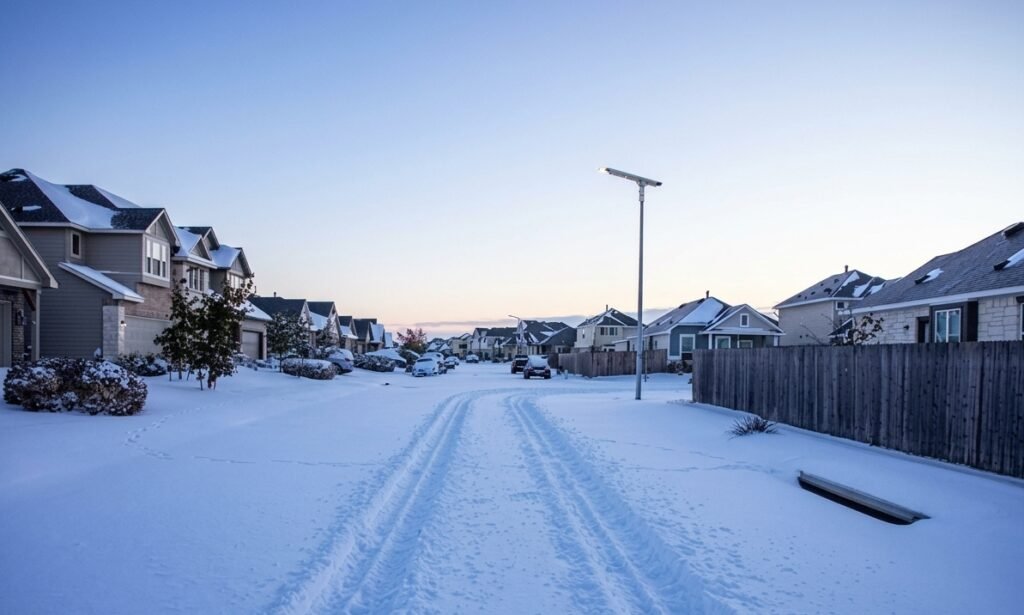
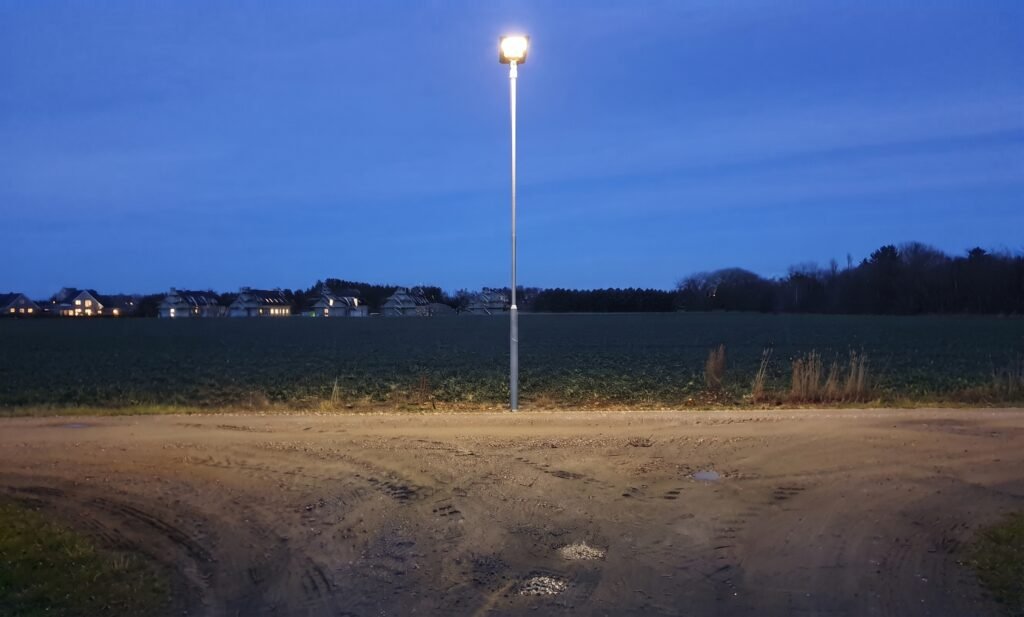
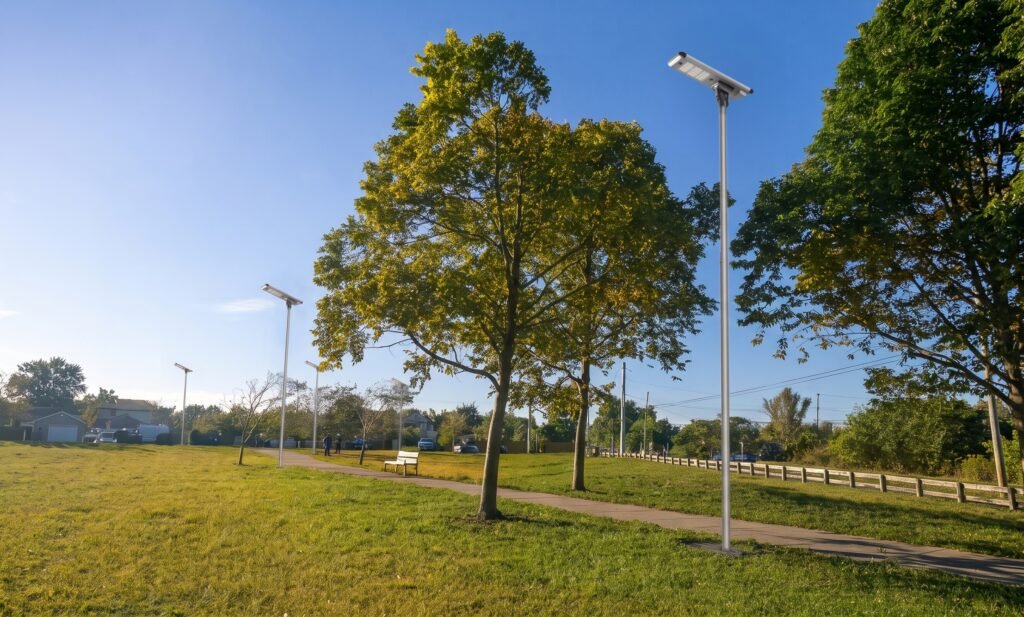
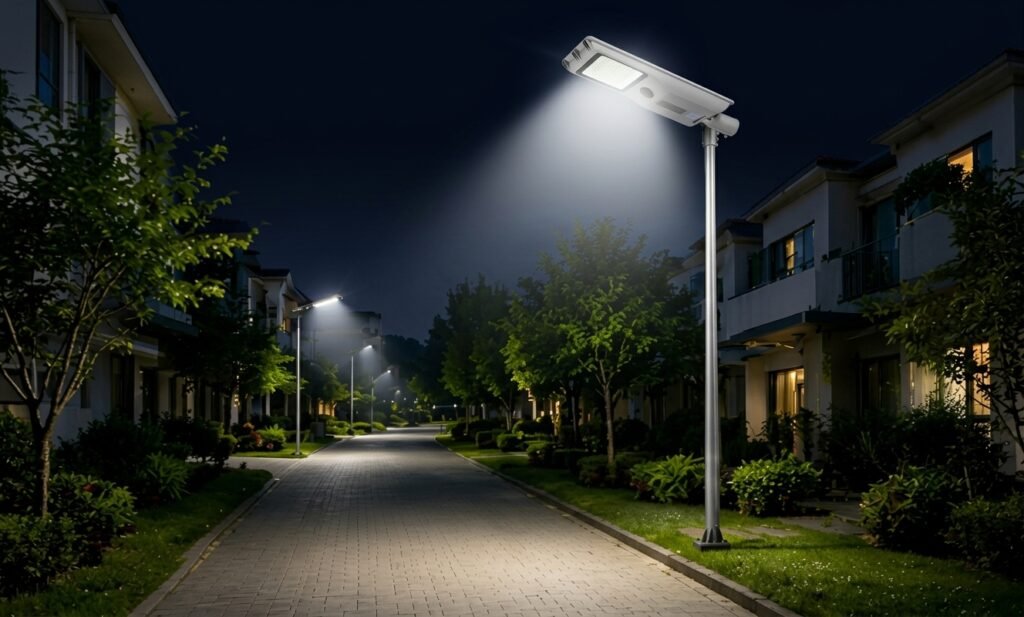
Many people mistakenly believe solar street lights only work under bright sunshine. It’s natural to worry that rainy or cloudy weather will render solar outdoor lighting useless. However, modern solar street lights can operate reliably through cloudy and rainy conditions. They harvest diffused ambient light for charging and draw power from backup batteries, paired with sophisticated smart control systems optimized for poor weather. Below is a full explanation of their operation and limitations during bad weather.
How Solar Street Lights Perform in Cloudy & Rainy Weather
Solar panels do not require strong direct sunlight to produce electricity. The whole system is designed to cope with low-light environments, relying on diffused light charging, battery storage and intelligent power control.
1. Power Generation from Diffused Light
Even when heavy clouds and rain block direct sunlight, solar panels can still capture scattered indirect light — known as Diffuse Horizontal Irradiance — to generate electricity. Charging efficiency drops significantly under these conditions, down to 10%–25% of the output on sunny days. Still, this weak continuous power supply maintains basic energy replenishment for the lighting system rather than cutting off power entirely.
2. Large-Capacity Backup Battery Storage
High-quality solar street light systems adopt reliable energy storage batteries, mostly lithium iron phosphate (LiFePO4) batteries that feature stable performance and long lifespans. Batteries get fully charged on sunny days to reserve surplus power for later use.
This stored power supports continuous lighting for 3 to 7 straight cloudy or rainy nights. The exact backup duration depends on battery capacity, solar panel size and overall system design, covering most cases of prolonged bad weather.
3. Intelligent Power Management Controller
Modern solar street lights come with built-in smart controllers, the key component for weather adaptation. When the system detects extended cloudy weather with insufficient incoming solar charge, it automatically enables energy-saving modes. The controller can lower LED brightness or trigger motion sensor operation: lights stay at low standby power and brighten only when pedestrians or vehicles approach. This smart adjustment cuts wasted energy and extends battery runtime.
Main Limitations in Severe Weather
Solar street lights handle short spells of cloud and rain well, yet they have clear limits during persistent extreme weather. The bottleneck is the system’s pre-configured battery autonomy period.
If rainy, overcast weather lasts longer than the rated backup days (typically 3–7 days), battery power will deplete without enough solar recharge. The lights will noticeably dim or shut down automatically to prevent permanent damage from deep battery discharge. Normal lighting resumes once sunny conditions return and recharge the batteries sufficiently.
Conclusion
Solar street lights do work on cloudy and rainy days. Leveraging diffused light generation, high-capacity battery storage and smart power-saving logic, they deliver stable outdoor lighting during short-term bad weather. For regions with frequent long-duration rainy seasons, select solar street lights with longer battery autonomy (5–7 days) to prevent lighting outages and guarantee year-round road safety.