If you’re planning an outdoor lighting project in a cloudy, rainy, or low-sunlight region, one question comes up again and again: do solar street lights charge without direct sunlight?
The short answer is yes. Solar street lights can charge using indirect or diffuse daylight, though at a significantly reduced rate. Here’s how it works, what to expect on overcast days, and the one factor that actually decides whether your lights stay on.
How Solar Street Lights Charge Without Direct Sunlight
Diffuse Horizontal Irradiance (DHI): Panels Use Daylight, Not Heat
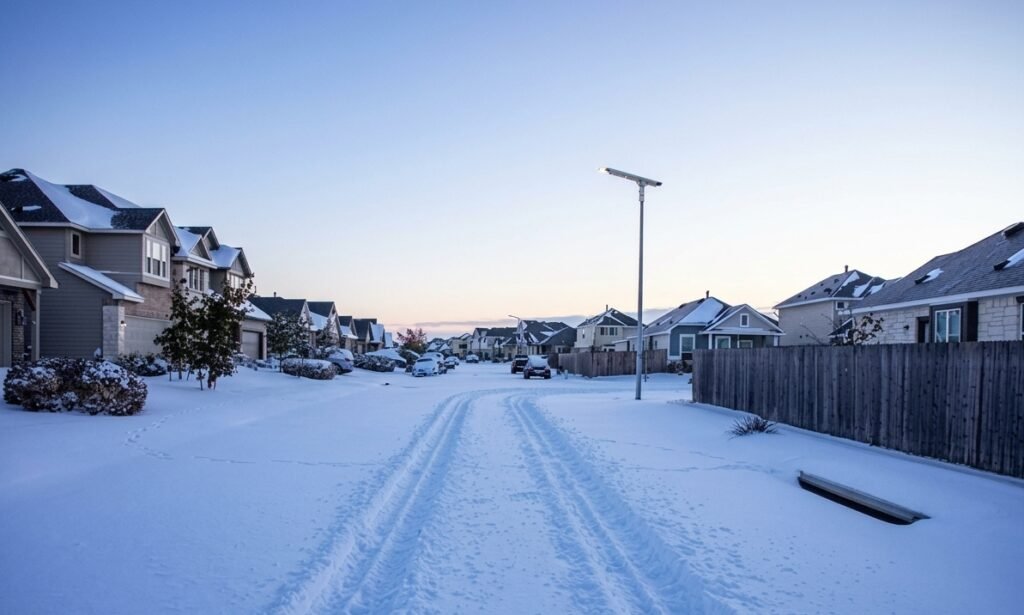
Solar panels don’t need blinding sun or heat to generate electricity — they respond to light. Even under heavy cloud cover, scattered ultraviolet and visible light reaches the panel from all directions. This is called diffuse horizontal irradiance (DHI), and it’s what keeps a solar street light charging on cloudy, overcast, and rainy days with a steady “trickle charge.”
Charging Efficiency on Cloudy Days: Expect a 10–50% Drop
Diffuse light charges, but slowly. On cloudy days, charging output typically drops to 10% to 50% of peak clear-sky capacity, depending on cloud thickness. That means a system sized only for sunny weather can fall behind — which is why professional solar street lights are designed around the next factor.
System Autonomy: Battery Backup for 3–7 Days of Low Sunlight
A properly engineered solar street light doesn’t rely on today’s weather. It banks energy for the bad weeks ahead:
- LiFePO4 batteries — high-cycle lithium iron phosphate reserves that store surplus energy safely.
- High-efficiency monocrystalline panels — the best low-light performers for capturing diffuse daylight.
- MPPT controllers (Maximum Power Point Tracking) — electronics that squeeze maximum energy out of the panel under weak, variable light.
Together, these components give a well-designed solar street light 3 to 7 days of autonomy — enough backup to keep shining through consecutive overcast or rainy days.
When Cloudy Weather Beats a Solar Street Light: Key Limitations
Prolonged Overcast Weather Can Deplete Battery Reserves
Autonomy has a hard limit. If cloudy or rainy conditions persist longer than the system’s rated autonomy days, the battery depletes — and the light dims or fails until the sun returns. Always size the battery and panel for the worst week of your climate, not the best day.
Deep Shade Hurts Far More Than an Overcast Sky
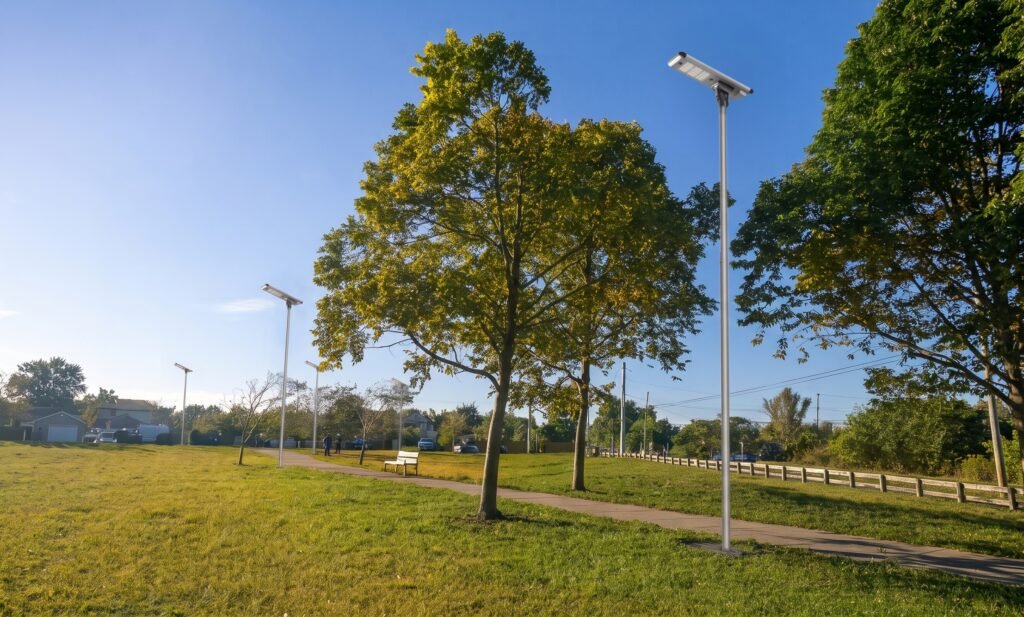
Not all “darkness” is equal. A bright, open overcast sky still delivers diffuse light from every direction. Deep shade from heavy tree canopies or nearby buildings blocks light outright — cutting charging efficiency far more than weather ever could. Placement matters as much as panel quality.
Artificial Light Can’t Realistically Charge Street Light Arrays
Solar panels can technically absorb energy from strong artificial sources like indoor LED or incandescent lamps — but the yield is far too low to matter. For large outdoor street light arrays, artificial light is a myth, not a charging strategy.
How to Choose a Solar Street Light for Cloudy or Low-Sunlight Regions
Before you buy, check three numbers:
- Rated autonomy days — does the system carry 3–7 days of backup for your region’s longest overcast stretches?
- Panel efficiency in low light — monocrystalline panels outperform standard panels under diffuse daylight.
- Controller type — an MPPT controller is essential for squeezing energy out of weak, cloudy-day light.
FAQ: Solar Street Lights Without Direct Sunlight
Do solar street lights need direct sunlight? No. They charge from diffuse daylight, though at 10–50% of clear-sky output on cloudy days.
Can solar lights charge on a cloudy day? Yes — diffuse horizontal irradiance (DHI) provides a trickle charge through cloud cover.
How many days can solar street lights run without sun? Professional systems are rated for 3 to 7 days of autonomy, depending on battery capacity and panel sizing.
Do solar street lights charge in the rain? Rain itself doesn’t stop charging — panels still capture scattered light, but efficiency stays in the low end of the range.
Bottom Line
Solar street lights are far more weather-resilient than their name suggests. Diffuse daylight keeps them charging through clouds, rain, and overcast spells, while battery reserves and MPPT controllers carry them through the darkest stretches. The real enemies aren’t clouds — they’re deep shade, poor placement, and undersized battery capacity. Size for the worst week, not the best day, and your lights will stay on long after the sun hides.