
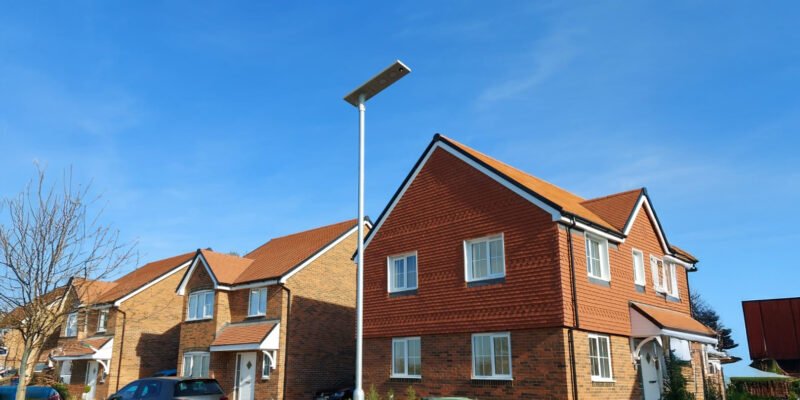
Solar panel efficiency is the percentage of sunlight energy hitting a panel that gets converted into usable electricity.
What Is Solar Panel Efficiency?
Solar panel efficiency measures how much of the sunlight that strikes a panel is converted into usable electricity. It is the single most direct indicator of how well a panel turns free sunlight into power for your streetlight system.
Typical Efficiency Levels of Solar Panels
Standard residential solar panels typically operate at 20% to 23% efficiency, while high-end or premium commercial models can reach up to 24% to 25% efficiency.
Efficiency by Solar Panel Type
- Monocrystalline: 18% to 24% efficiency (most common and efficient residential option)
- Polycrystalline: 13% to 16% efficiency (older, less common, budget-friendly technology)
- Thin-Film: 7% to 13% efficiency (lightweight and flexible, but requires more space)
- Emerging Tech (e.g., Perovskite / Tandem): Can exceed 27% to 32% in advanced or lab settings
Key Factors Affecting Solar Panel Efficiency
- Temperature: Solar panels perform best in cooler, bright conditions. Excess heat increases resistance and reduces daily energy output.
- Shading and Dirt: Trees, chimneys, dust, bird droppings, or snow block sunlight and drop overall production.
- Angle and Orientation: Panels facing the true equator (south in the Northern Hemisphere, north in the Southern Hemisphere) at an optimized tilt capture the most direct light.
- Degradation: Panels naturally lose a small percentage of their efficiency each year (usually around 0.5% annually).
Does High Efficiency Matter?
Higher efficiency means you need fewer panels to generate the same amount of power, which is ideal if you have limited roof space. However, if you have a large roof, a slightly lower-efficiency system with more panels can generate the exact same total electricity—often at a lower overall installation cost.
Choosing high-efficiency solar panel is very important.
High-efficiency panels make sense when space is tight, but when space is plentiful, a larger array of lower-efficiency panels can deliver the same output at a lower upfront cost. For solar streetlights, choosing the right panel type, placement, and maintenance habits matters as much as the efficiency number itself.