
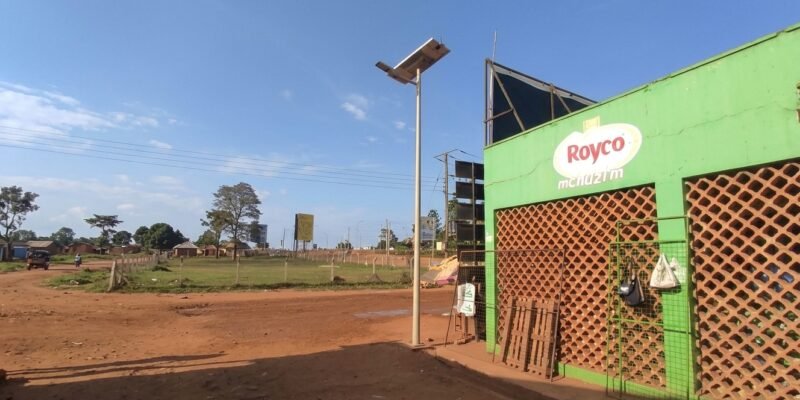
When buying solar-powered LED street lights, the first question buyers ask is almost always: “How many watts?” But wattage alone won’t tell you how bright your road will be — and in many cases, it will actively mislead you. This guide clears up the confusion and shows you how to choose the right solar street light for your project.
1. The Wattage Confusion: What Most Buyers Get Wrong
Many clients automatically assume that higher wattage equals better brightness and wider road coverage. 10W, 20W, 30W sound weak; 100W, 200W, 300W sound impressive. But the reality is different: higher wattage does not automatically mean better performance.
Here’s why. Wattage (W) only measures electrical power consumption. What actually determines how bright your road looks is luminous flux, measured in lumens (lm), together with luminous efficacy — how efficiently the LED converts power into visible light.
This is exactly why international roadway lighting standards, such as EN13201 (Europe) and IS1944 (India), specify lighting requirements by illuminance class and lux level — not by wattage. So when you evaluate a solar street light, always ask about lumens and the lighting class your road requires, not just the wattage number printed on the label.
2. Low Wattage (10W–30W): Ideal for Narrow Lanes & Pathways
Low-wattage models are best suited for narrow lanes, walkways, residential by-lanes, park paths, and minor rural village roads — places where vehicle traffic is light and the main goal is safe, comfortable pedestrian visibility.
| Wattage | Typical Lumen Output | Pole Height | Recommended Use |
|---|---|---|---|
| 10W | 1600–2200 lm | 3–4 m | Pedestrian pathways, small compound access roads |
| 20W | 3000–4200 lm | 4–5 m | Campus walkways, quiet residential alleys |
| 30W | 4000–5400 lm | 4–6 m | Sub-streets, parking lots with low vehicle flow, village inner roads |
3. Medium Wattage (45W–100W): The Sweet Spot for Public Road Projects
This range is the most-used choice for real-world roadway solar lighting projects — and for good reason. It delivers enough brightness for actual vehicle traffic without demanding the oversized hardware that very high wattages require.
| Wattage | Typical Lumen Output | Pole Height | Recommended Use |
|---|---|---|---|
| 45–60W | 5400–7200 lm | 6–8 m | Urban secondary roads, residential colony main streets, rural collector roads |
| 80–100W | 9600–14000 lm | 8–10 m | Urban arterial roads, multi-lane expressways (M2/M3 lighting class under EN13201) |
A word of caution: standalone solar street lamps marked “200W” or “300W” are often nominal or exaggerated marketing figures, not real working power. Always compare actual lumen output — plus the size of the solar panel and battery — before believing the wattage number.
4. High Wattage (150W–300W): Only When Backed by Heavy-Duty Hardware
Practical 200W–300W solar LED street lights do exist, but they come with real engineering costs. To deliver that kind of true power, they require:
- Oversized solar panels — to capture enough energy during the day;
- Massive lithium-iron-phosphate (LiFePO₄) batteries — to store it reliably through the night.
So if a cheap all-in-one “200W” or “300W” solar streetlight is offered without heavy-duty PV panels and a large battery, you need to think twice. Real high-wattage solar lighting is serious hardware — if the price seems too good to be true, the wattage probably is too.
5. How to Choose the Right Wattage for Your Project
When you face the choice — how many watts do I actually need? — remember one rule:
Lumens and luminous efficacy define real brightness. Wattage is just a number.
Choose by your road type, pole height, and the lighting class required by your local standards — not by chasing the biggest wattage sticker.
6. Not Sure Yet? Let Us Help You Choose
Still unsure how many watts your project needs? Send us your project conditions and we’ll recommend the right configuration:
- Sunshine conditions — How many hours of effective sunshine does your location get on a typical sunny day? Does your area have continuous rainy days?
- Road specifications — What is your project’s road width, and what target lux level does your local road lighting standard require?
With these two pieces of information, we can match the right wattage, lumen output, panel size, and battery capacity to your site — no guesswork, and no overpaying for wattage you don’t need.